






Brief Historical Background
The Ioffe Institute traces its history back to the Physics and Technology Division of the State Roentgenological and Radiological Institute (SRRI), established in September 1918 on the initiative of Professors A.F. Ioffe and M.I. Nemenov. Abram Fedorovich Ioffe was elected the first director of the SRRI and simultaneously headed the physics and technology division.
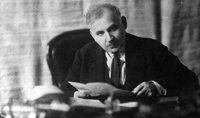
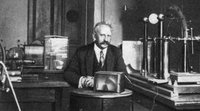
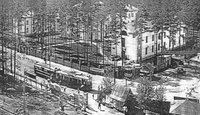
In 1921, the division became an independent institute. A.F. Ioffe remained the director of this institute until 1950. In 1923, the Institute moved to a building at Doroga v Sosnovku, 2, now the main building of the Institute at 26 Politekhnicheskaya Street.
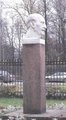
In May 1939, the institute, under the name Leningrad Physics and Technology Institute (LPTI), became part of the USSR Academy of Sciences. In 1960, the name of the institute's first director was added to its title. The institute is rightfully considered the cradle of Soviet physics; future Nobel laureates N.N. Semenov, L.D. Landau, and P.L. Kapitsa began their scientific careers here, and world-renowned scientists such as A.P. Alexandrov, E.F. Gross, Ya.B. Zeldovich, I.V. Kurchatov, I.E. Tamm (also a future Nobel Prize winner), Ya.I. Frenkel, and many others worked here
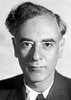
L.D. Landau
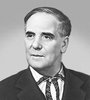
P.L. Kapitsa

A.P. Alexandrov
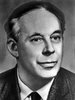
E.F. Gross
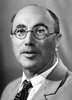
Ya.B. Zeldovich

I.V. Kurchatov
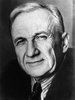
I.E. Tamm
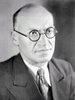
Ya.I. Frenkel
A focus on implementing large-scale projects for the development of the country's economic potential and defense capability is a distinctive feature of the research conducted at the Ioffe Institute, whether theoretical or applied. Perhaps the most striking evidence of this is the Institute's role in the Great Patriotic War and especially its work during the siege of Leningrad.
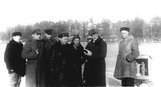
Testing a deflectometer
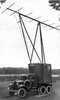
RUS-1 Radar
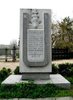
Monument to the LPTI ship degaussing system in Sevastopol
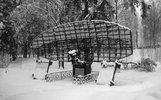
Redut Radar in Toksovo
Here, critical scientific and technical challenges were solved, including the creation of pulsed radar, the degaussing of warships, ensuring the safety of the "Road of Life" that connected besieged Leningrad with the mainland across the ice of Lake Ladoga, and the development of armor for tanks and aircraft.
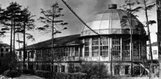
Ioffe Institute scientists were initiators of the Soviet atomic project and formed its core personnel: I.V. Kurchatov, A.P. Alexandrov, Yu.B. Khariton, Ya.B. Zeldovich, I.K. Kikoin, and others. The Institute developed the technology for isotope separation for the production of thermonuclear weapons and solved problems of aerodynamics and thermal protection for the nose cones of ballistic missiles for Soviet cosmonautics, which enabled the country to be the first to reach space. Technological independence was fostered by technologies in power electronics and semiconductor optoelectronics, also developed at the Ioffe Institute.
The research of Ioffe Institute scientists covers virtually the entire field of modern physics. The institute gained worldwide renown for its work in solid-state physics, semiconductors, quantum electronics, astrophysics, plasma physics, and physical gas dynamics. Specialists are well acquainted with the work of the institute's staff on the physics of interplanetary space and cosmology, controlled thermonuclear fusion, and the motion of bodies in the atmospheres of Earth and other planets.
More than one hundred institute staff members have been awarded the highest national scientific honors, including Lenin and State Prizes of the USSR, State Prizes of the Russian Federation, Prizes of the Council of Ministers of the USSR and the Russian Federation, and named medals and prizes from the USSR Academy of Sciences and the Russian Academy of Sciences.
Work carried out at the institute has been awarded Nobel Prizes twice.
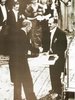
In 1956, the Nobel Prize in Chemistry was awarded to Academician N.N. Semenov (jointly with C.N. Hinshelwood) "for their researches into the mechanism of chemical reactions." The prize-winning work was carried out at the Ioffe Institute and published in 1927 when N.N. Semenov was a staff member of the institute.
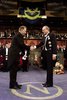
In 2000, the Nobel Prize in Physics was awarded to the Director of the Ioffe Institute, Academician Zhores I. Alferov (jointly with H. Kroemer and J. Kilby) for his work on the creation and development of semiconductor heterostructures, "that have laid the foundation for modern information technology."
In 2018, the Institute celebrated its 100th anniversary. Today, the Ioffe Institute is a multidisciplinary scientific and technological center focused on researching major fundamental and applied problems in physics, one of the largest research institutes in Russia and a leading global research center. It consistently ranks at the top of the list of Russian institutes by total citation index of scientific publications.
The Ioffe Institute is a leader in the development of nanotechnologies for addressing priority challenges in energy and energy conservation: developing efficient photovoltaic and thermoelectric converters, high-power fast-acting semiconductor switches, energy storage devices based on lithium-ion batteries; and advancements in thermonuclear energy: spherical tokamaks and diagnostic systems for the under-construction international thermonuclear experimental reactor ITER.